SpaceX Limits Starlink Service for Ukraine's High-Speed Drones Without Warning
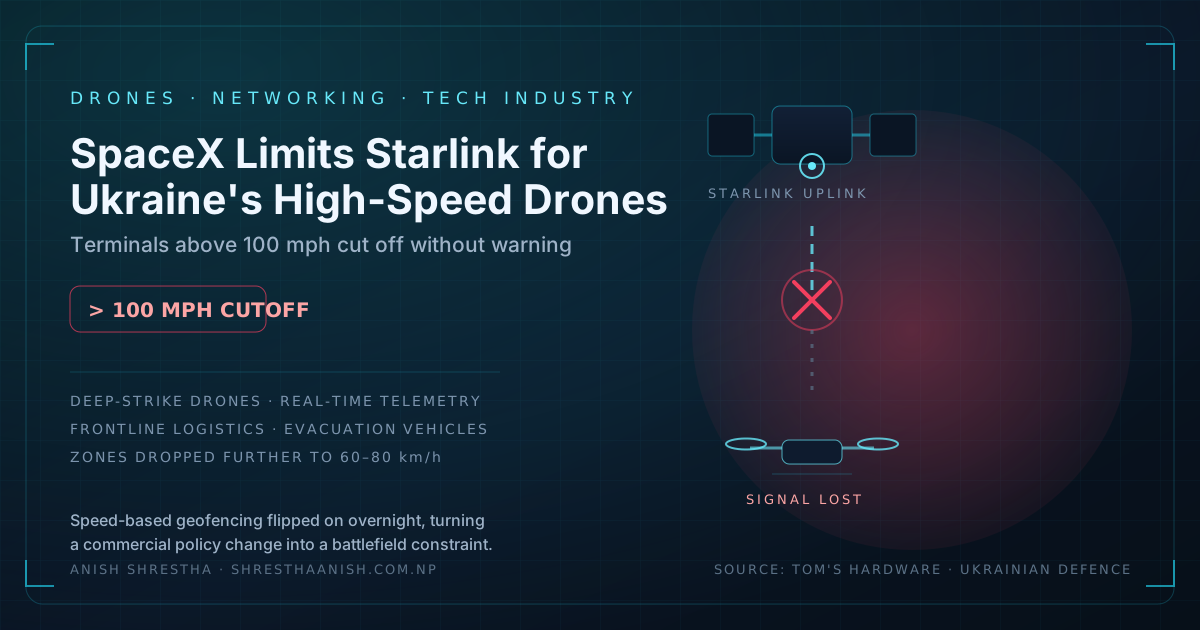
SpaceX has restricted Starlink connectivity for terminals moving over 100 mph (160 km/h), disrupting critical high-speed drone operations and frontline military logistics across Ukraine.
Unannounced Connectivity Geofencing
In a sudden move that caught defense forces off guard, SpaceX has imposed new operational restrictions on Starlink satellite internet services across Ukraine.
According to reports from Tom's Hardware citing Ukrainian defense officials, SpaceX unilaterally introduced speed-based terminal caps overnight without prior warning. The new limitation restricts terminal operations for devices traveling above 100 mph (160 km/h), directly targeting high-speed aerial vehicles and mobile military platforms.
Ukrainian presidential adviser Serhiy Beskrestnov confirmed the move on Telegram, stating that frontline forces received no advance notice of the change, resulting in the immediate disruption of ongoing combat missions.
Operational Impact on Frontline Missions
Starlink has long served as the digital communications backbone for Ukraine's defense, prized for its resilience against heavy electronic warfare and signal jamming. The new speed cap severely impacts two vital areas of operation:
- High-Speed Long-Range Drones: Deep-strike kamikaze drones reliant on real-time Starlink telemetry lose connectivity mid-flight once exceeding velocity thresholds.
- Mobile Logistics and Evacuation: Frontline supply transport and fast-moving command vehicles operating hexacopters or field comms experience dropped connections while traveling at high speeds.
Political Friction and Evolving Constraints
This is not the first time Starlink's operational parameters have been altered during the conflict, but the sudden speed-based velocity restriction marks a significant shift in corporate policy over battlefield tech.
Ukrainian defense ministry sources indicated that internet terminal speed thresholds dropped further to around 37–50 mph (60–80 km/h) in certain zones, making high-speed tactical maneuvers increasingly difficult to execute.
While SpaceX and leadership have previously maintained that Starlink is intended for defensive and civilian communications rather than offensive weapon guidance systems, military analysts note that enforcing velocity limits creates immense operational friction for field operators depending on low-latency satellite links.
The Strategic Risk of Commercial Tech Reliance
The sudden speed limits highlight a critical vulnerability in modern warfare: complete dependence on private commercial infrastructure during active conflict.
As drone warfare increasingly relies on low-earth orbit satellite networks for long-range navigation and jam-resistant control, unexpected policy changes by commercial providers can instantly reshape tactical capabilities overnight.